
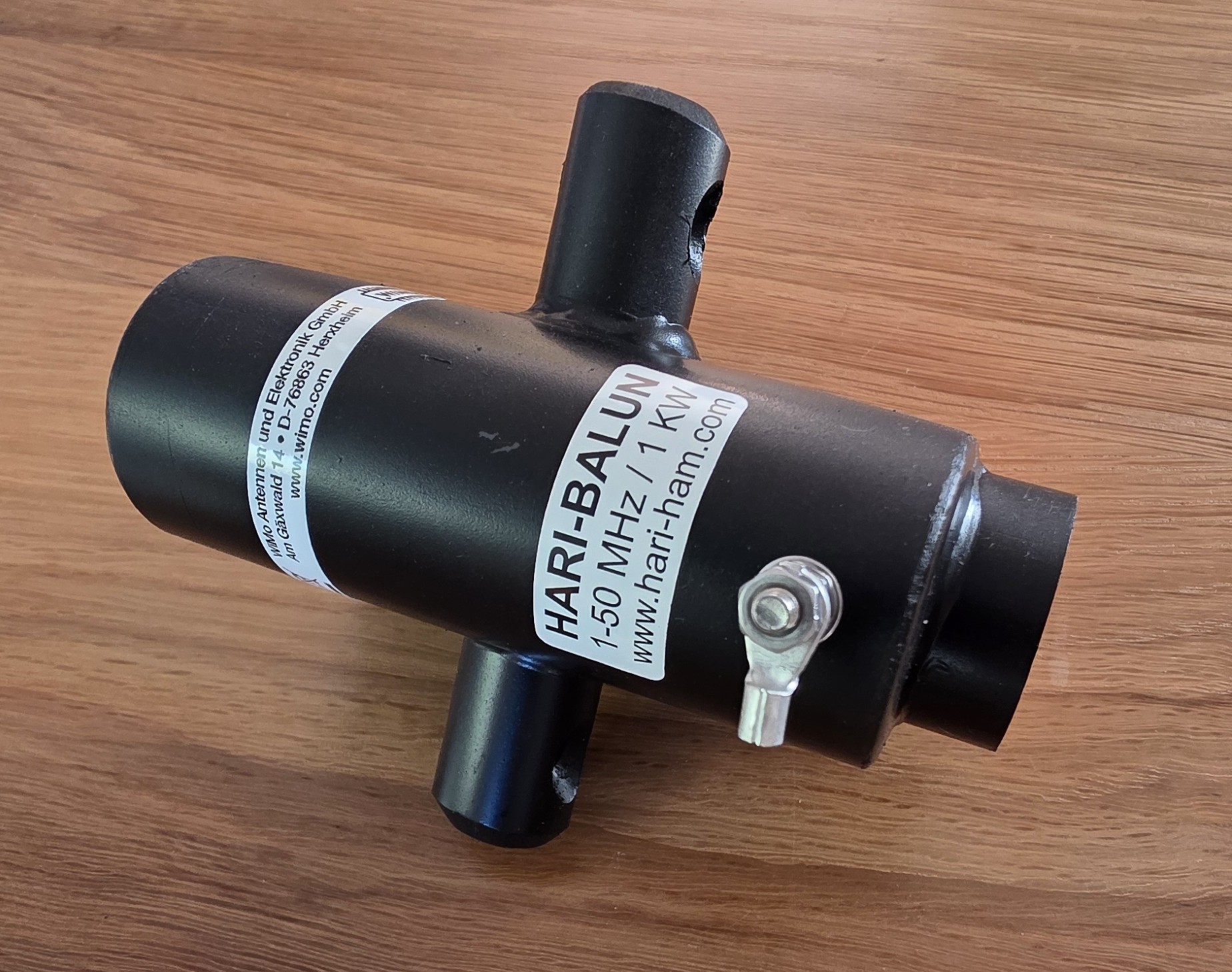
In this post, I will measure the SWR and insertion loss of this balun manufactured and sold by Wimo: The Hari-Balun 1:4.
This article WAS NOT written by AI; only the images were customized.
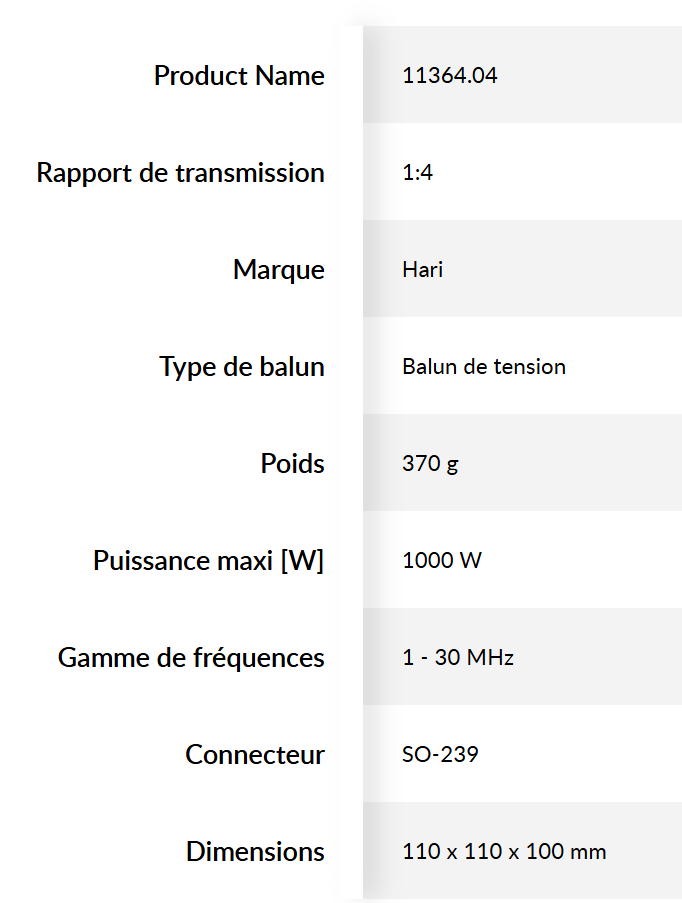
Here are the advertised specifications:
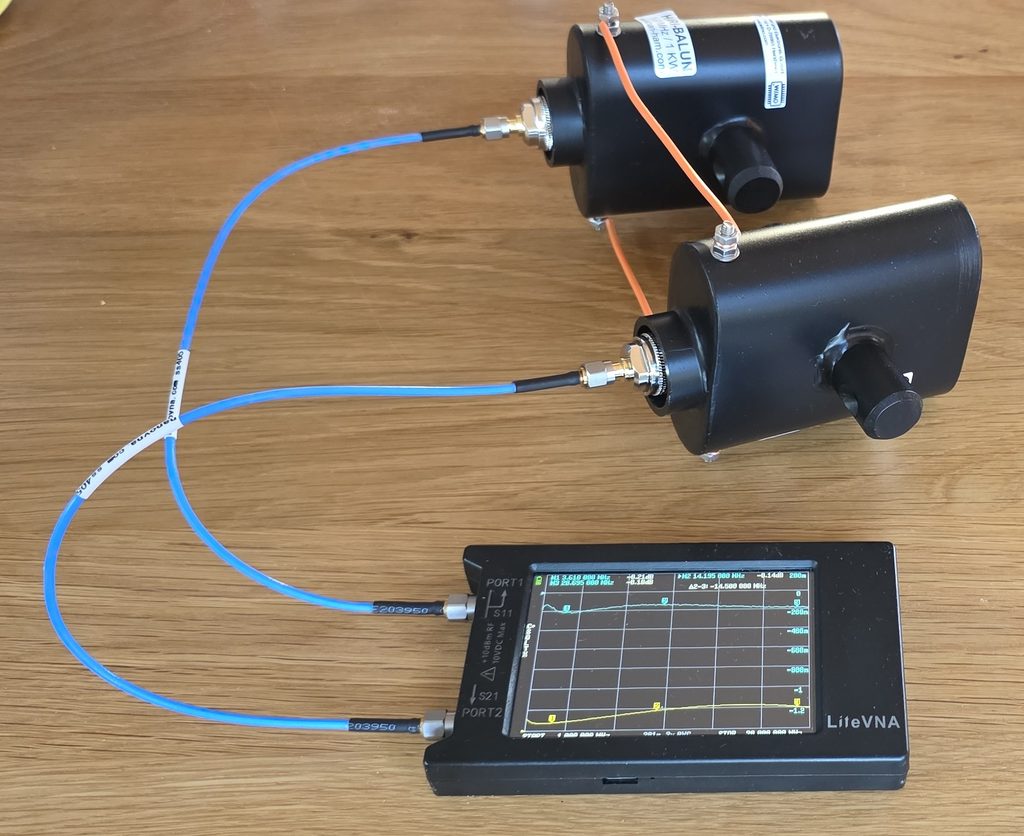
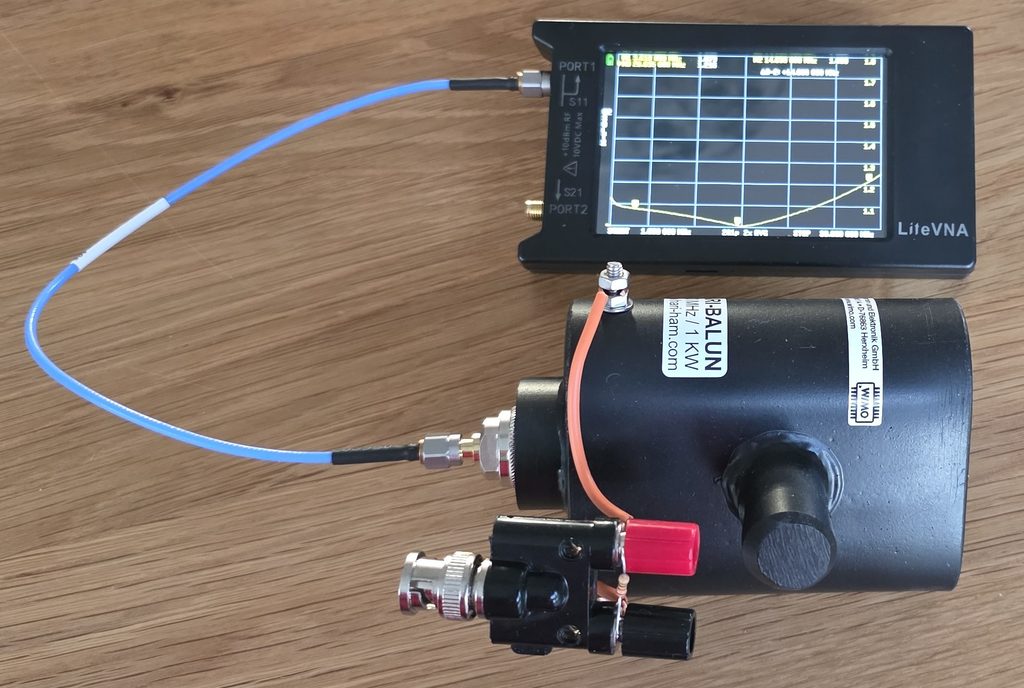
Just like in the test of the Diamond BU50A balun, we will place two baluns back-to-back as shown in the following photo, making it easy to perform measurements with a VNA.
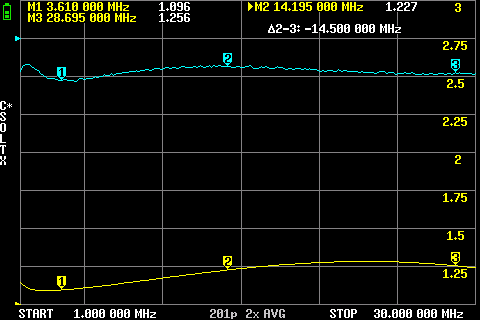
The results are significantly better than those of the Diamond BU50A.
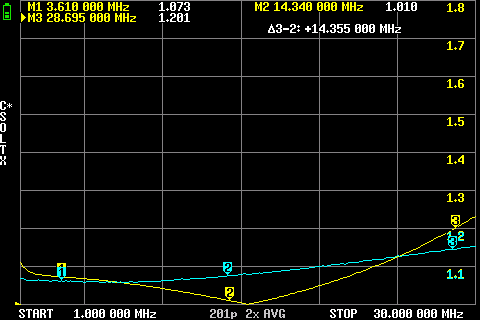
The SWR remains below 1.3:1, and even better than 1.25:1 below 15 MHz.
At 3.6 MHz –> 1.1 : 1
At 14.2 MHz –> 1.23 : 1
At 28.7 MHz –> 1.26 : 1
Regarding losses, we also obtain good results. Keep in mind that measurements must be divided by two, as we have two baluns connected in series.
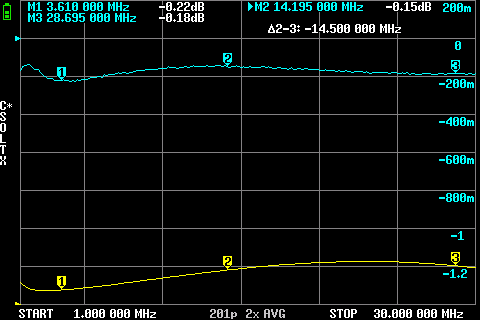
At 3.6 MHz –> -0.22 dB / 2, which equals -0.11 dB
At 14.2 MHz –> -0.15 dB / 2, which equals -0.075 dB
At 28.7 MHz –> -0.18 dB / 2, which equals -0.09 dB
One last quick consistency check using a 220 Ohm resistor connected at the balun output.
The blue curve shows the SWR measurement of the 220 Ohm resistor alone, which is not perfect as frequency increases (normal behavior).
This allows us to evaluate the yellow curve, which represents the 50 Ohm SWR of the balun loaded with that same 220 Ohm resistor.
The result is quite satisfying, leading to the conclusion that the SWR drift observed with the balun is strongly linked to the drift of the 220 Ohm load resistor itself.
What do you think of these measurements and this Hari 1:4 Balun?
73, Bob
Leave a Reply
You must be logged in to post a comment.